By the third gate I realized my bag was a mess: everything jammed into one pocket, shirt wrinkled, charger buried. I always overpack “just in case” and then scramble before every connection.
I learned how to pack a travel bag efficiently so getting on and off transport feels calm, not chaotic.
How to Pack Travel Bag Efficiently For Maximum Space And Organization
This teaches a simple, repeatable approach for fitting a week’s worth of stuff into one carry bag and keeping it usable in transit. It’s practical, not heroic: less shoving, more smart placement. You’ll end with a bag that opens predictably and moves with you instead of against you.
What You’ll Need
- 30–40L carry-on travel backpack (front-loading, soft-sided)
- Packing cubes set (lightweight, varied sizes)
- Compression packing cubes (for bulky winter items)
- Hanging toiletry bag (waterproof, compact)
- Travel packing folder / shirt folder (keeps dress shirts flat)
- Shoe bags (lightweight, zip) or mesh shoe sacks
- Digital luggage scale (portable)
- Lightweight foldable daypack (stashes into pocket)
Also have your passport, reservations, and a simple itinerary (digital and one printed copy).
Step 1: Choose a realistic outfit template and stick to it
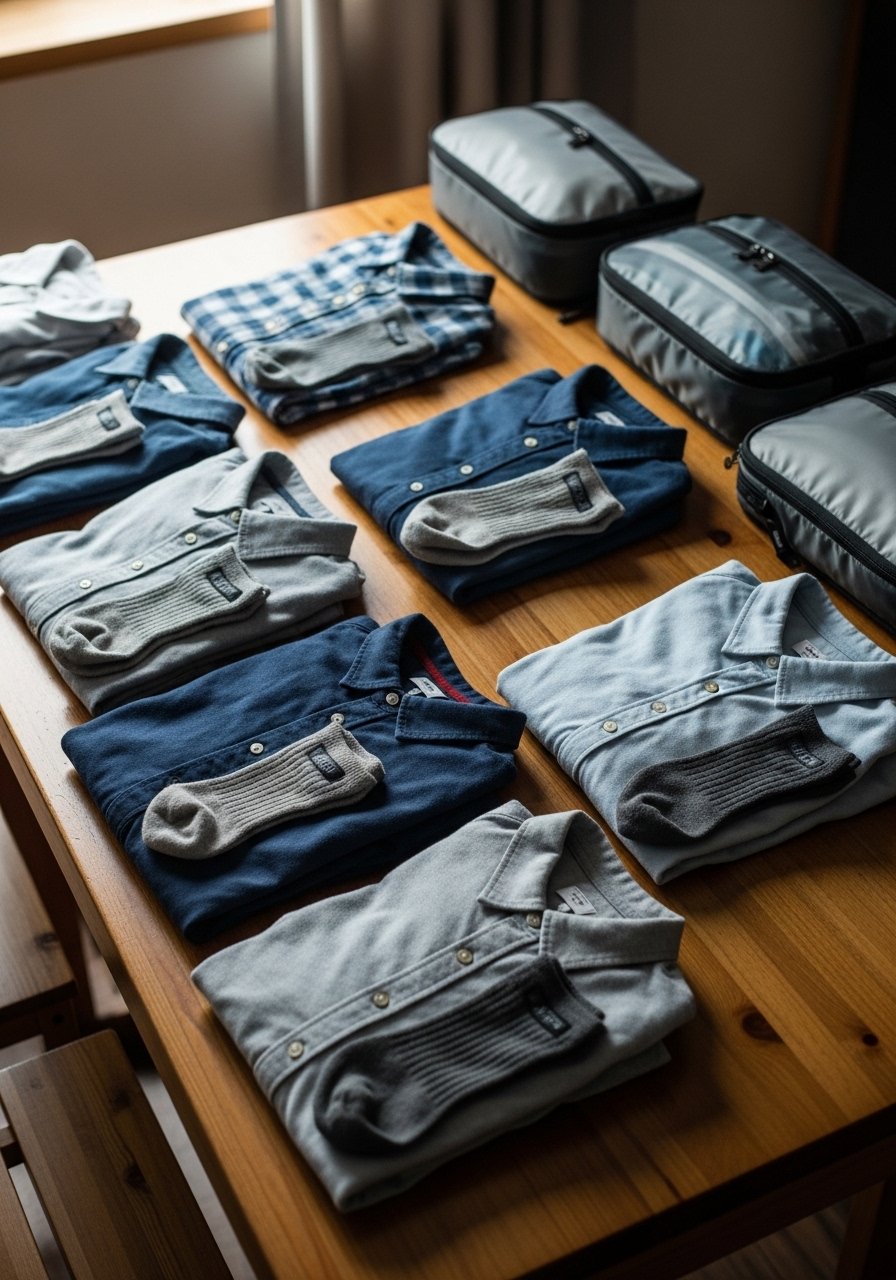
I decide the minimum outfit each day needs and pack around that template. For most trips that’s two tops, one bottom, underwear, socks, and one layer per day. I do this before I touch any packing cubes so I don’t overpack for “options.”
This changes how I shop my closet and reduces stubborn “maybe” items. Travelers often miss counting shoes and accessories inside the outfit totals. Small mistake to avoid: don’t pack outfits around events you aren’t sure you’ll attend — that adds dead weight.
Step 2: Pack cubes by outfit, not by clothing type
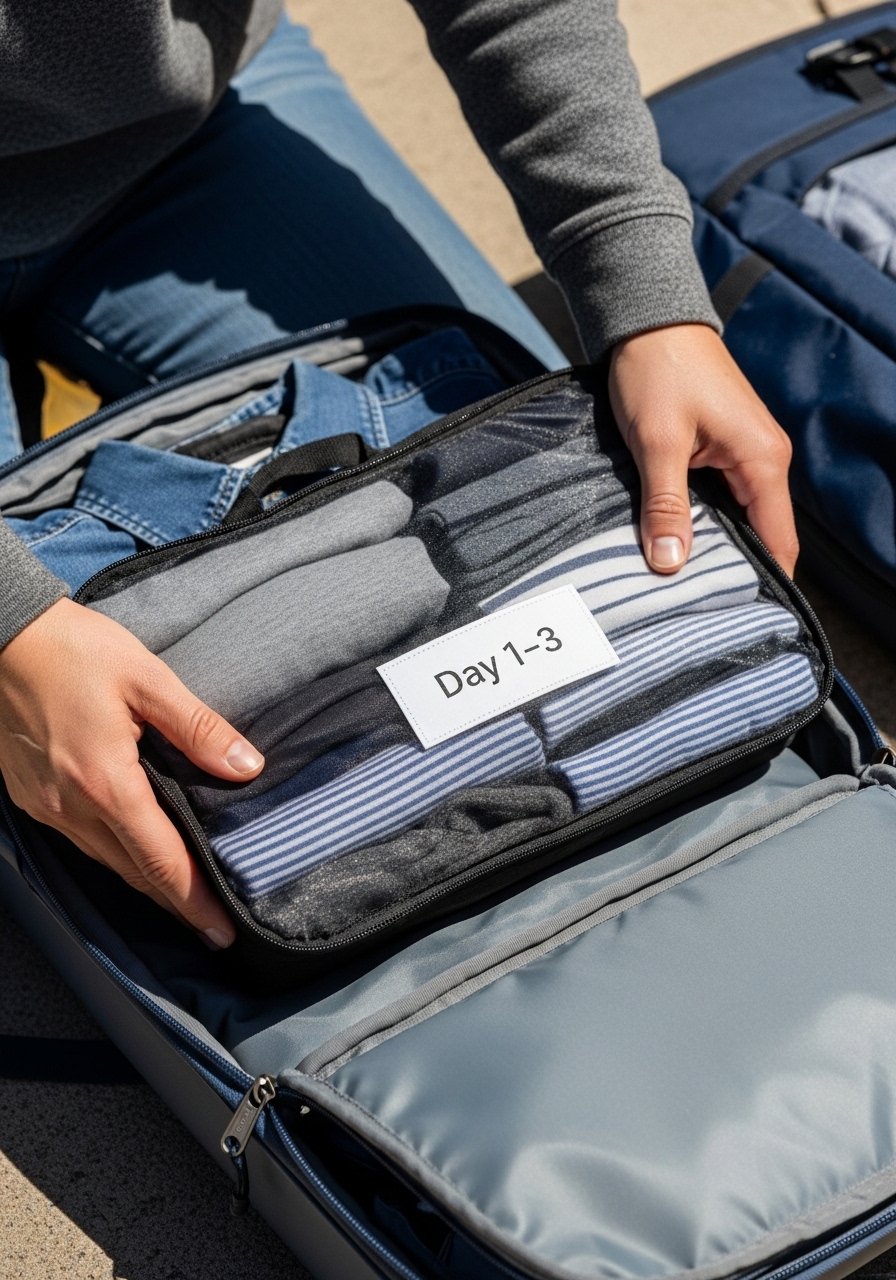
I put complete outfits into the same cube: top, bottom, underwear, socks. That means when I reach for “Day 2” I grab one cube and I’m done. I use one small cube for socks/underwear and one medium for daily outfits. It keeps mornings fast and prevents digging.
The practical change is immediate — less riffling and fewer wrinkled shirts. An insight people miss: folding consistently inside the cube saves more space than random stuffing. Mistake to avoid: don’t overfill a cube to the point it bulges; it stops compressing and distorts the bag’s balance.
Step 3: Use compression only where it actually helps
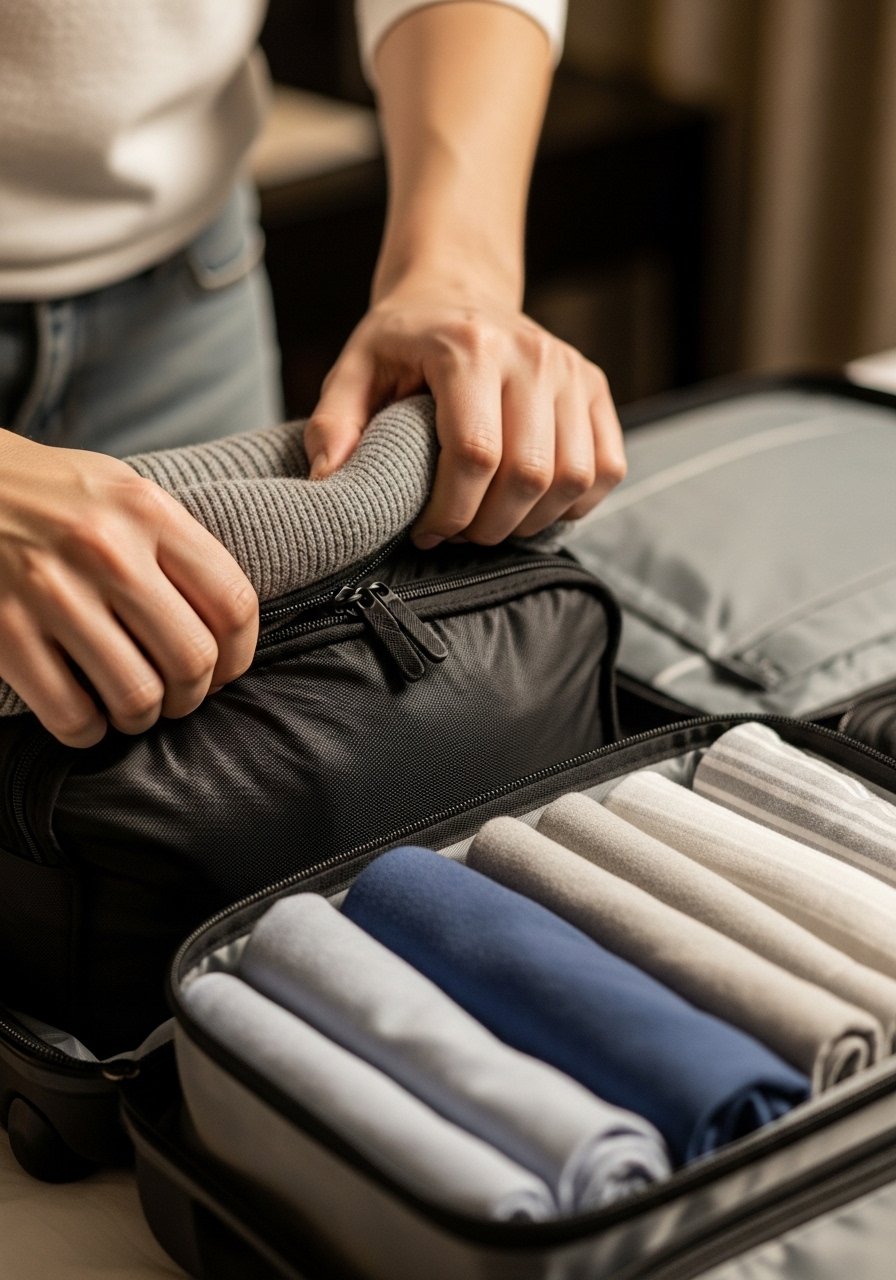
I reserve compression cubes for bulky, non-crease items: sweaters, down jackets, or a pair of jeans. For wrinkle-prone shirts I prefer a packing folder or rolling them tightly in a non-compression cube. Compression is tempting, but it can zap your bag’s balance and make items hard to retrieve.
What changes is the feel of the bag — less rock-solid, more modular. Travelers often overuse compression and then hate the suction effect when trying to unpack. Small mistake: don’t compress liquids or electronics; keep them in accessible pockets.
Step 4: Put heavy items near your back and essentials on top
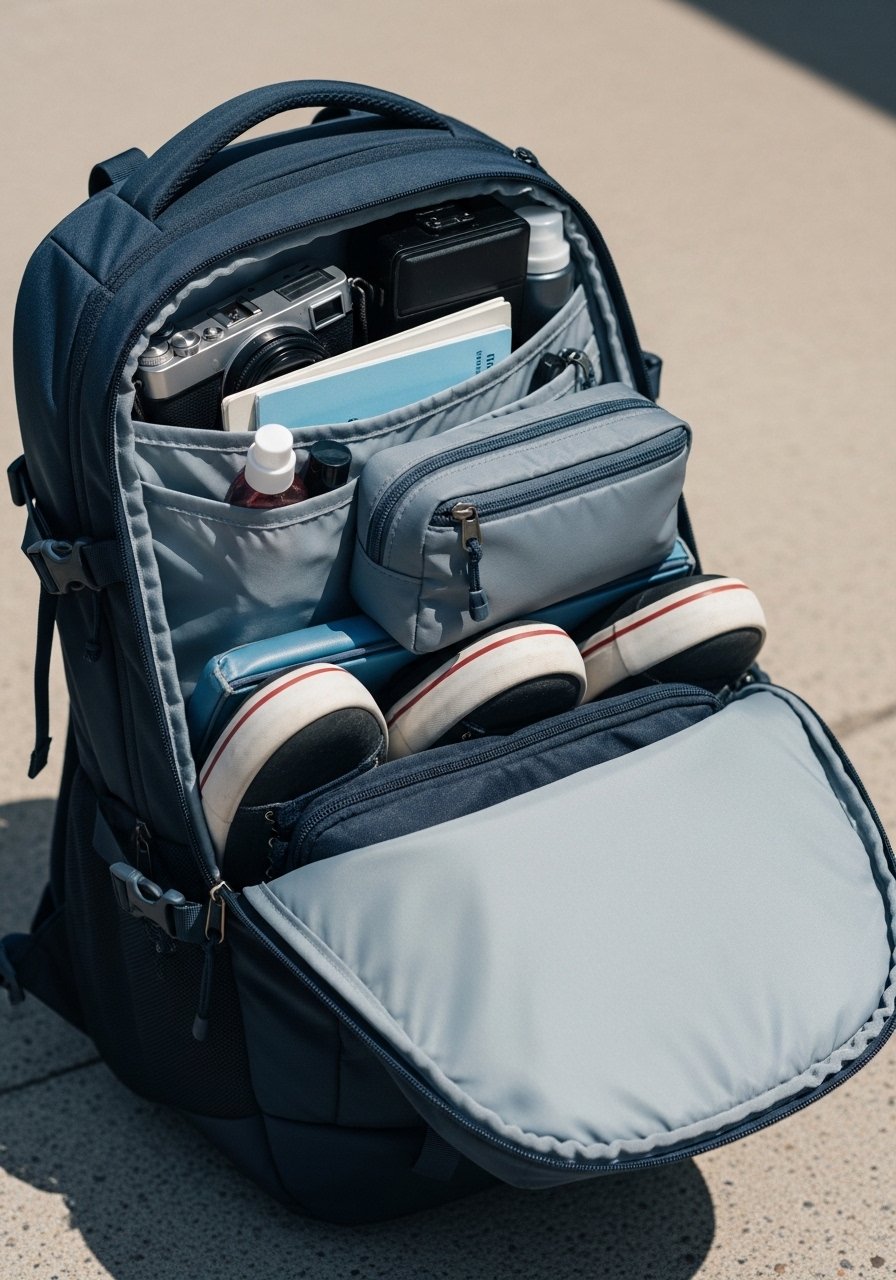
I place heavier items — shoes in bags, a toiletry kit, a camera — close to the bag’s back panel and near the top of the main compartment. Lighter, fluffier stuff goes toward the front or bottom. I keep passports, tickets, phone charger, and a small snack in the top pocket or an external quick-access pocket.
It makes carrying easier and reduces shoulder strain when I’m moving between transit points. Travelers miss that front-loading bags change how weight distributes; a bottom-heavy pack feels wobbly. Mistake to avoid: don’t bury must-haves under clothes; you’ll recreate the same scramble at security.
Step 5: Wear bulk, use shoe cavities, and leave a small “open” pocket
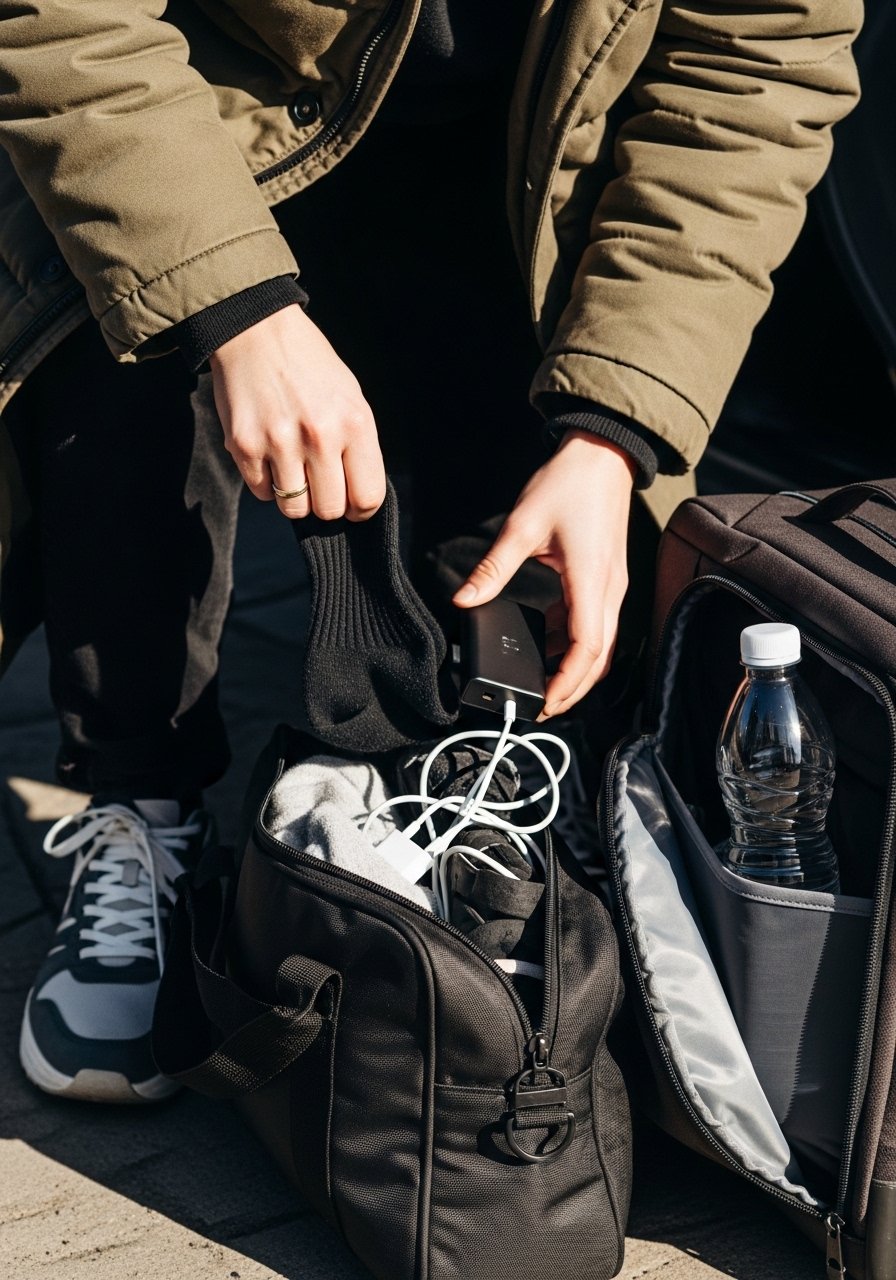
I wear my bulkiest items on travel days — coat, hiking shoes, heavy sneakers — and use those shoe cavities for small dense items like socks, charging cables, or a travel umbrella. I also intentionally leave one small pocket somewhat empty for pickups: a market loaf of bread, a souvenir, or wet rain gear.
This keeps flexibility and reduces the urge to close the bag and cram. Many travelers forget to leave any space for purchases and end up buying another bag. Mistake to avoid: don’t overfill the shoe cavity with liquids or anything that can leak.
Step 6: Weigh, rebalance, and seal the deal
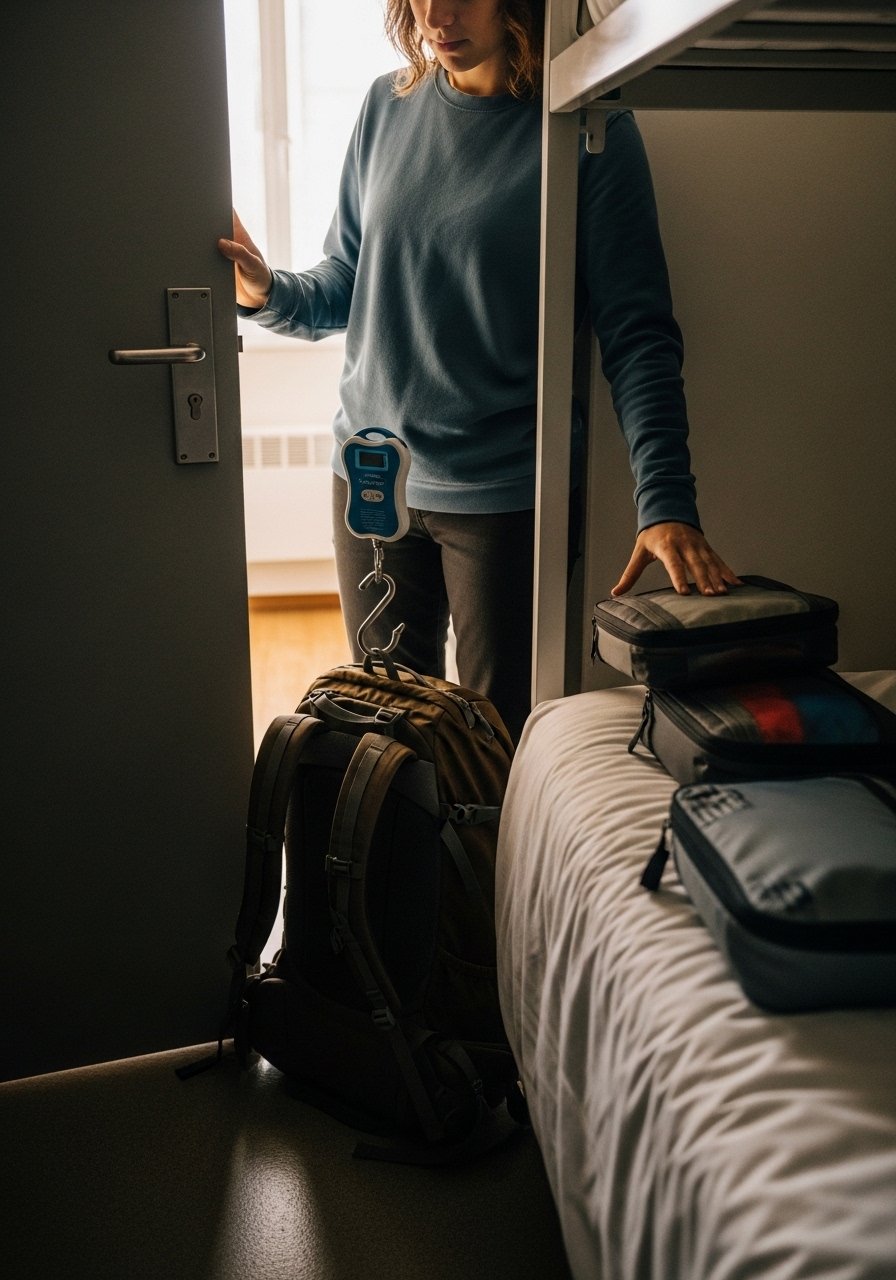
Before I zip and go I weigh the bag and make any last shuffles: move a heavy cube toward my back, swap a top pocket item to front, or remove one non-essential. I also put critical items (documents, a lightweight daypack) where I can access them in transit.
The emotional change is calm — I leave knowing the bag won’t surprise me at check-in or when I sprint for a connection. Travelers miss this step and pay fees or suffer the last-minute panic. Small mistake: don’t weight-check with a full water bottle; measure the travel-ready setup.
What People Pack That They Never Use
Most folks bring duplicates and “just in case” extras. Common offenders:
- Two dress outfits for a trip with no formal plans.
- Multiple bulky shoes when one pair plus sandals would do.
- Single-use cosmetics or full-size toiletries.
I pared down by imagining three different days and asking if each item fits any. If not, it goes home. A small rule: if you haven’t used it on a trip in two years, it’s probably dead weight.
How to Keep Your Bag Easy to Manage During the Trip
A few habits keep the bag helpful:
- Repack nightly: fold what you used back into its cube the same way.
- Keep a small plastic bag for dirty laundry and empty pockets.
- Rotate items into the daypack for long outings.
This sounds tedious, but five minutes each evening prevents that last frantic hour before a train. The trick: make the routine simple and repeatable.
What Matters More Than Packing More
Space is useful, but predictability matters more. Prioritize:
- Accessibility: can you get your ticket, phone, and charger in 10 seconds?
- Balance: will the bag stay comfortable after two hours?
- Flexibility: is there a little room for things you buy?
I’d rather remove one unused shirt than gain another inch of space with a poorly balanced pack. It makes travel feel calmer and less wasteful.
Final Thoughts
Start with a honest outfit template and only add things that fit it. Use cubes as little systems, not just containers. Weigh and rebalance once before you leave.
Packing efficiently isn’t about ruthless minimalism. It’s about making the bag behave predictably so you can move with less stress and more freedom.